Rocket propulsion • additive manufacturing
Additively Manufactured Regeneratively Cooled Rocket Nozzle
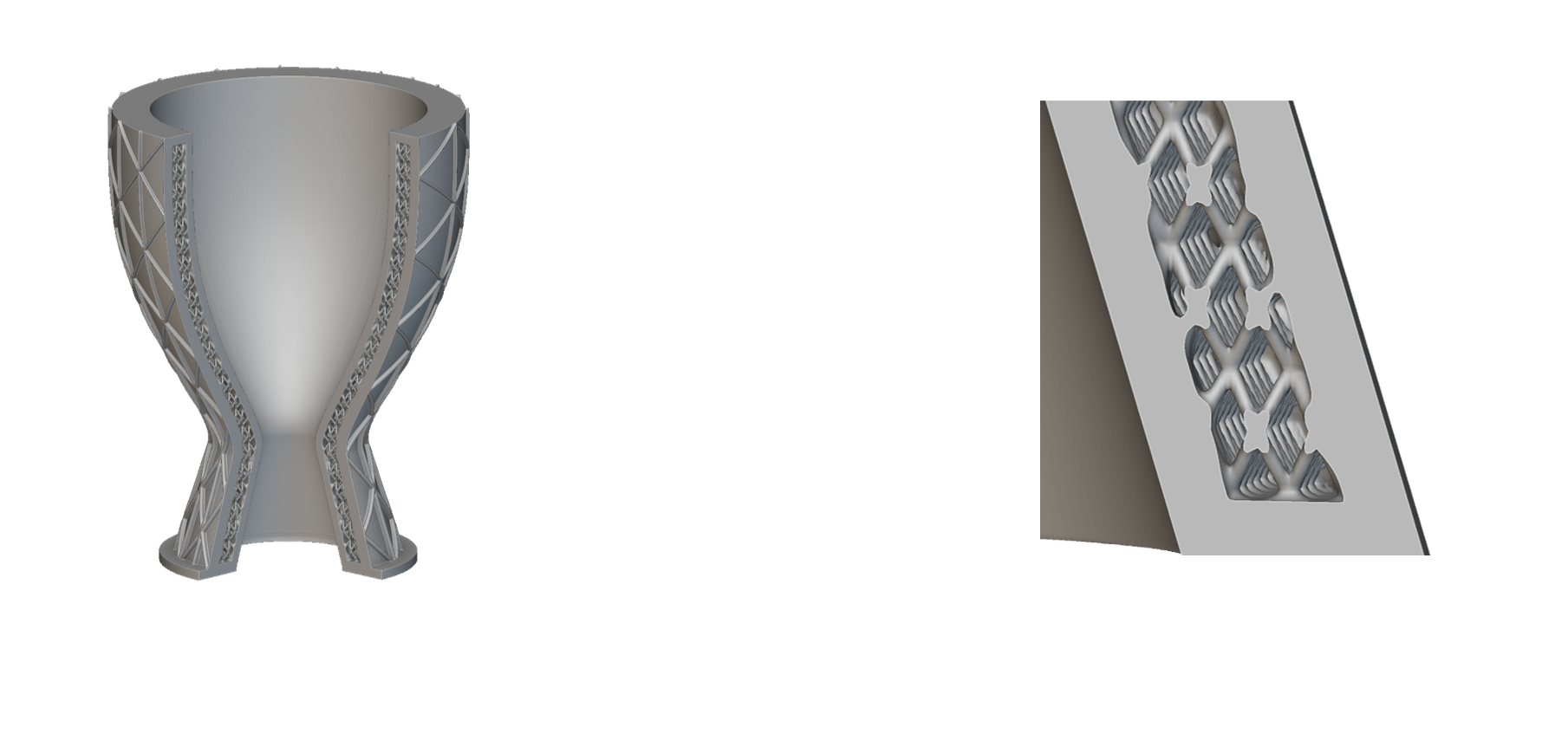
An additively manufactured nozzle concept that replaces conventional rectangular passages with BCC lattice cooling channels, aiming for a single-build cooling structure with better heat transfer.
Basic facts
Core design and manufacturing details.
Design development
From rectangular cooling channels to a BCC lattice cooling core.
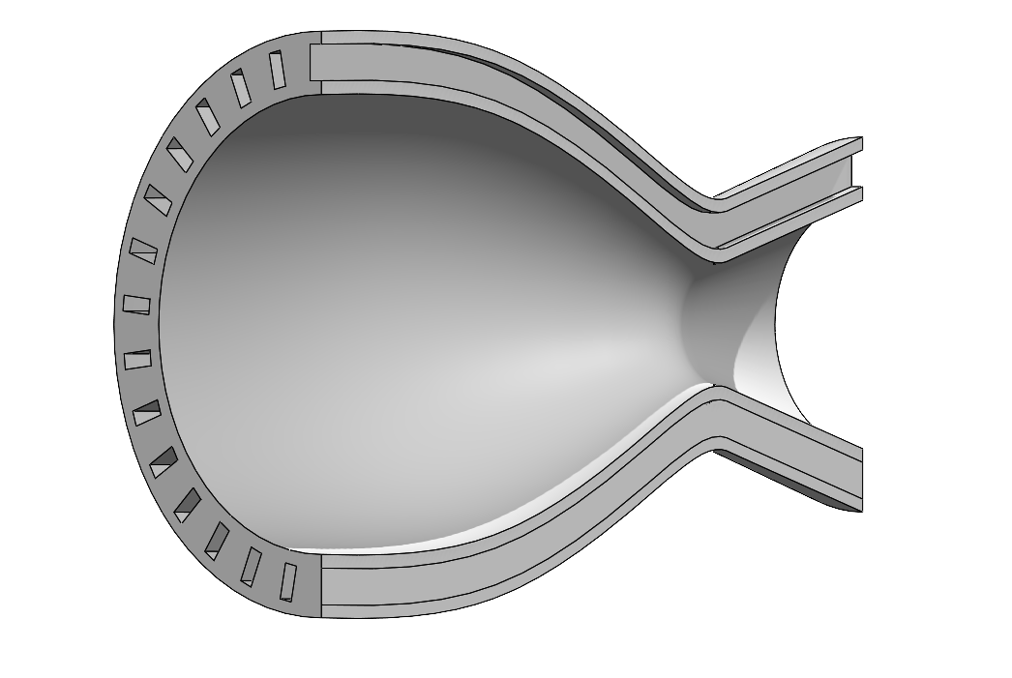
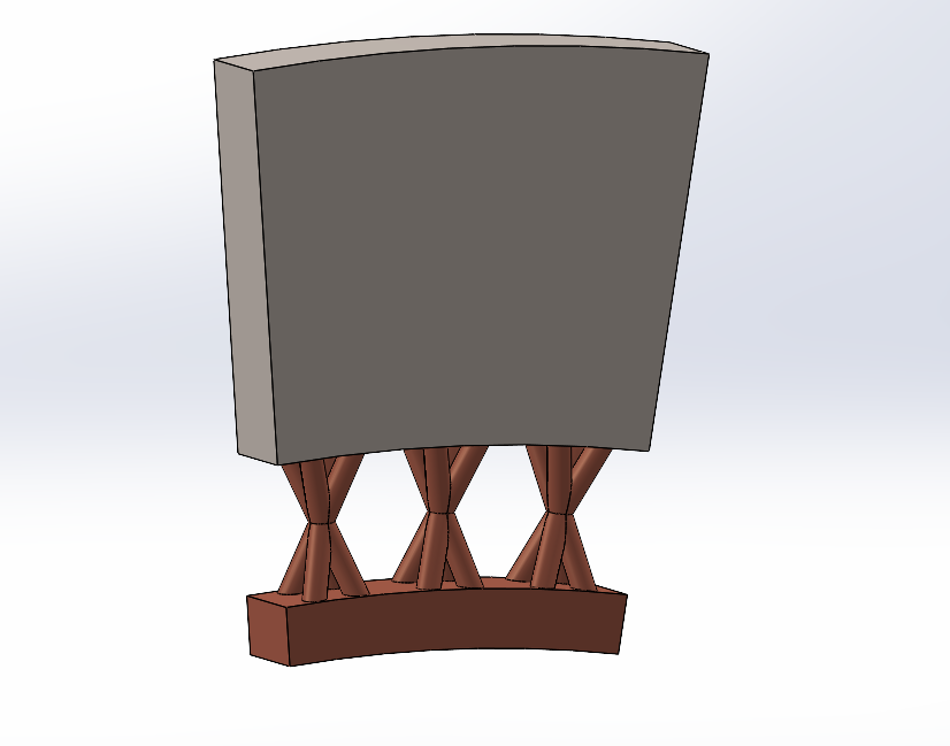
I found that BCC lattices can lower wall temperature and stress by improving heat transfer and spreading load more evenly. In my study, thicker lattice rods reduced temperature, stress, and strain, while pressure drop increased — the core design tradeoff.
Research foundation
I started this project with UReCA-funded research, then grew it into a full nozzle build.
I developed this nozzle project in two parts. The first phase was funded research through UReCA, where I studied lattice cooling structures as an additive-manufacturing-only alternative to conventional cooling channels.
I then took that research forward by modeling the full nozzle and manufacturing it at the Sooner Advanced Manufacturing Lab.
Open the research presentation2. Isogrid reinforcement
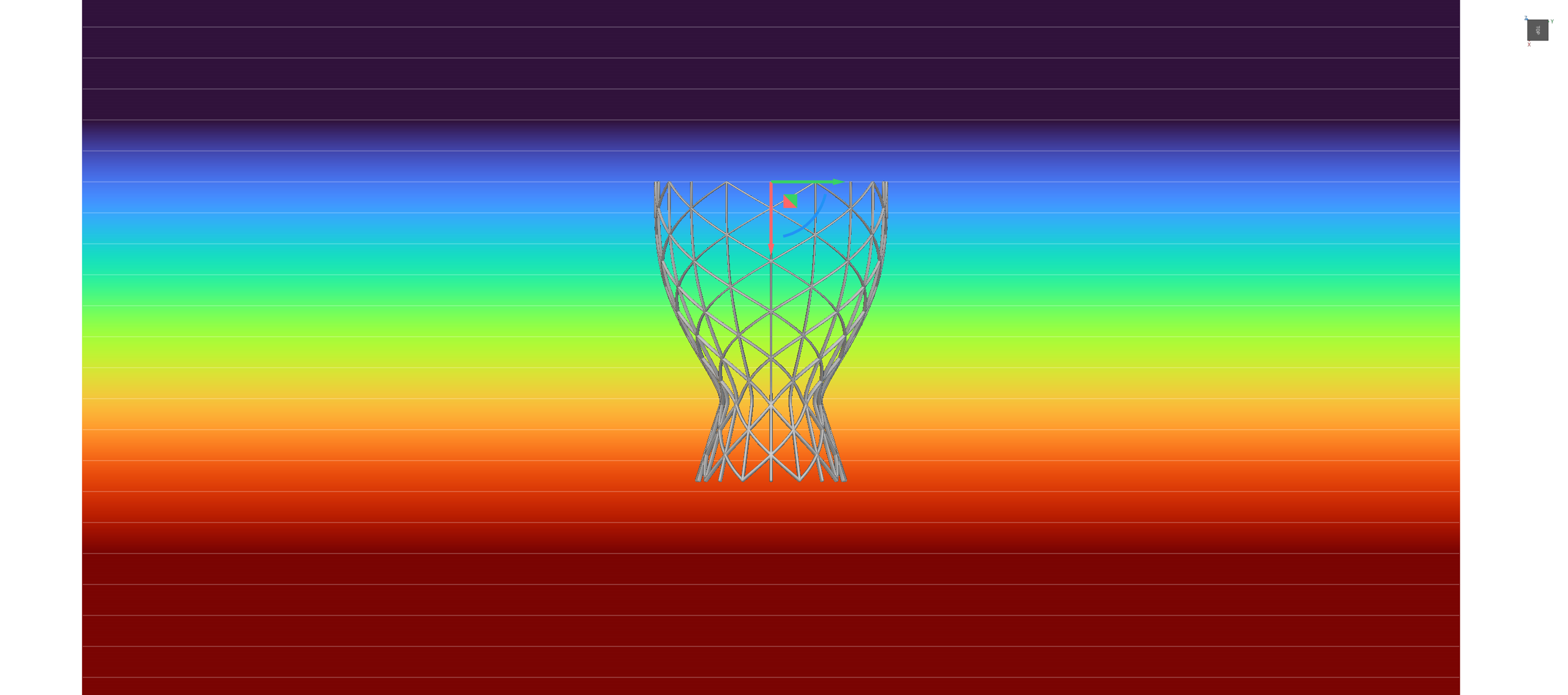
Parametric field equations vary the isogrid thickness along the nozzle axis.
The field-view image shows how the outer isogrid changes thickness by location. I used field-driven equations so the rib thickness could respond to pressure along the axis of the nozzle instead of staying uniform everywhere.
That variation helps the shell manage hoop stress more efficiently by thickening reinforcement where the loading is higher and relaxing it where the load is lower.
3. Build process simulation
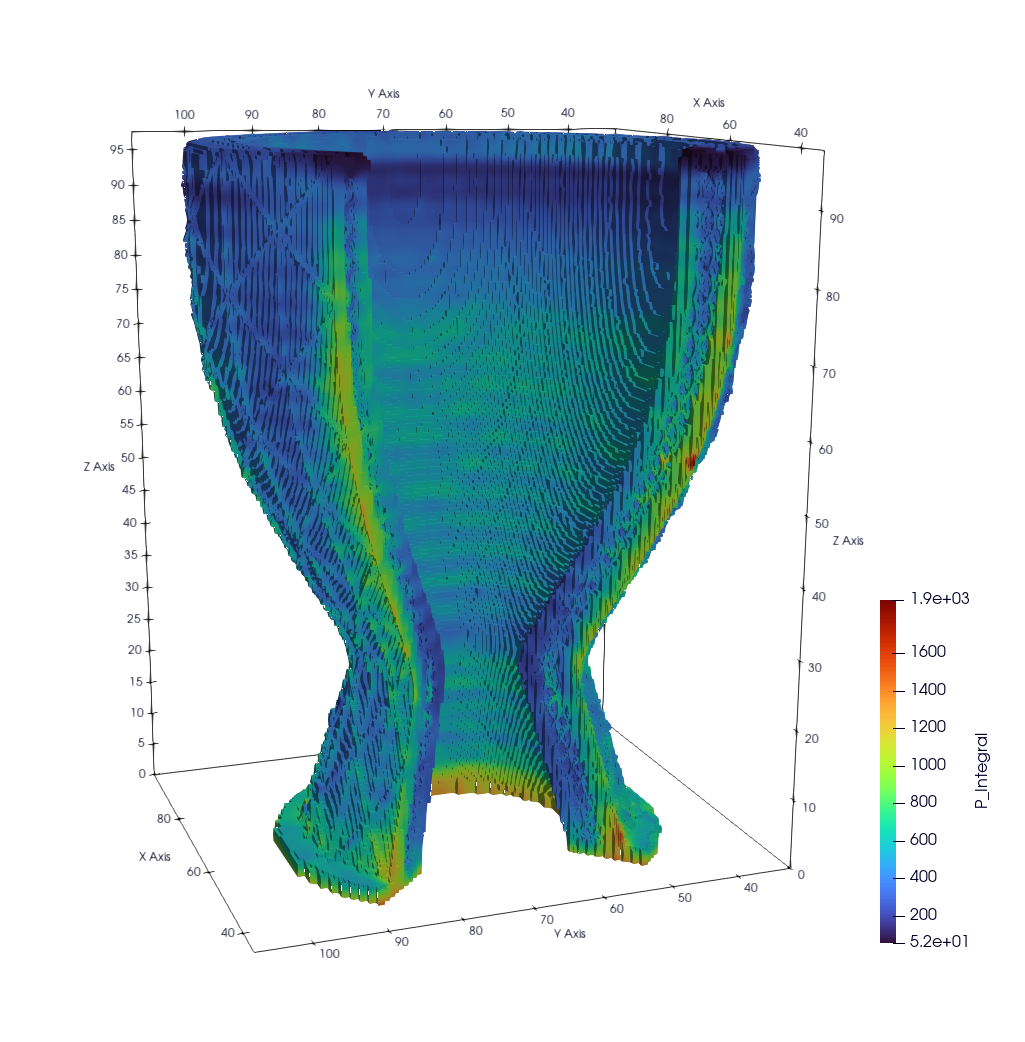
The simulation checks printability before the nozzle is built.
I used a build-process simulation, not a service-load FEA. In LPBF, geometry, overhangs, thermal effects, residual stress, and distortion can all create print failure risk. The P integral helps assess that risk by relating the local von Mises stress field to the surrounding area and volume, making it easier to spot regions that may warp, crack, separate from the build plate, or fail during the build.
For this nozzle, the results looked acceptable and supported moving the design forward to manufacturing.
Results
Thermal, structural, and flow results show the design tradeoff.
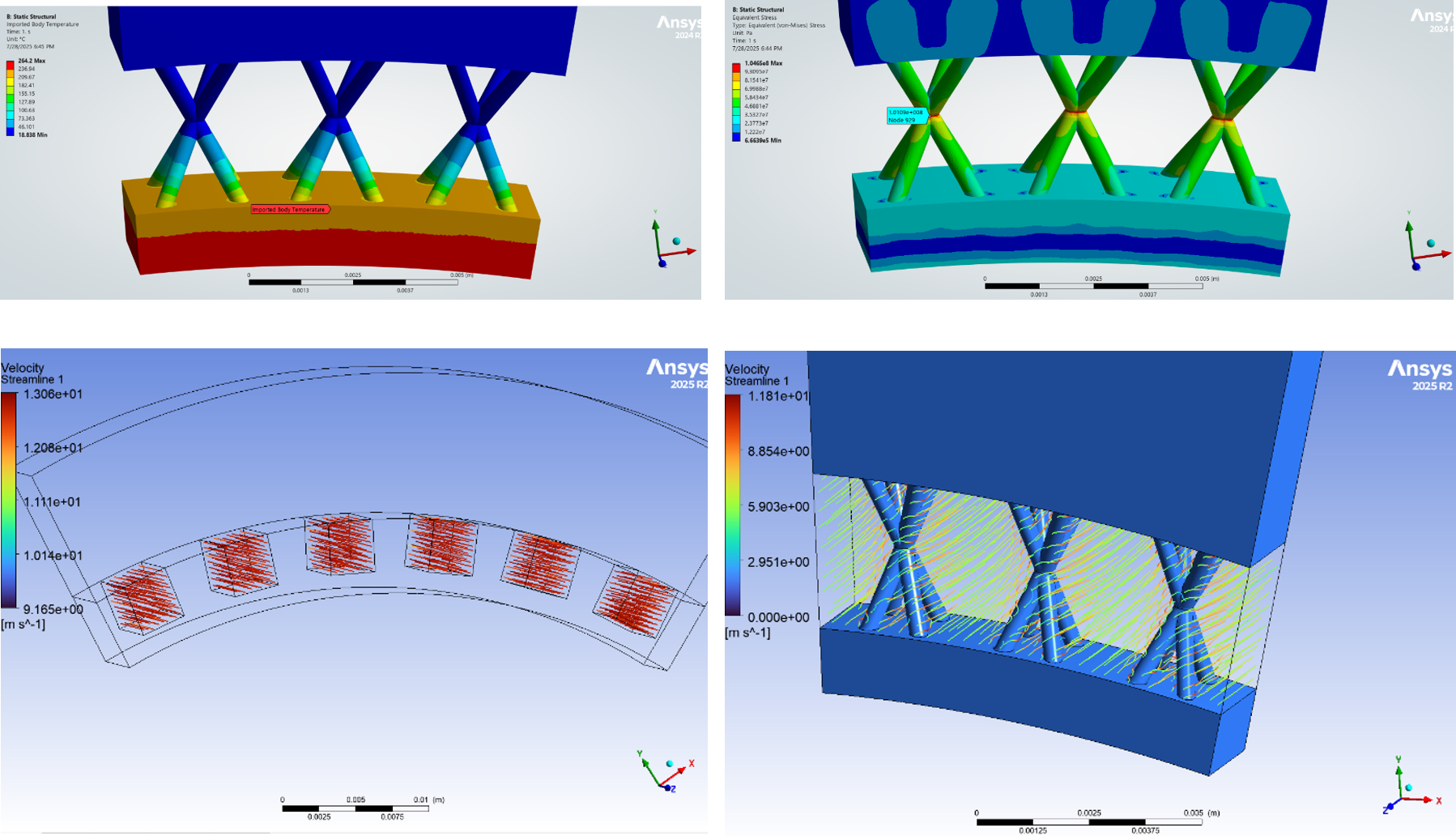
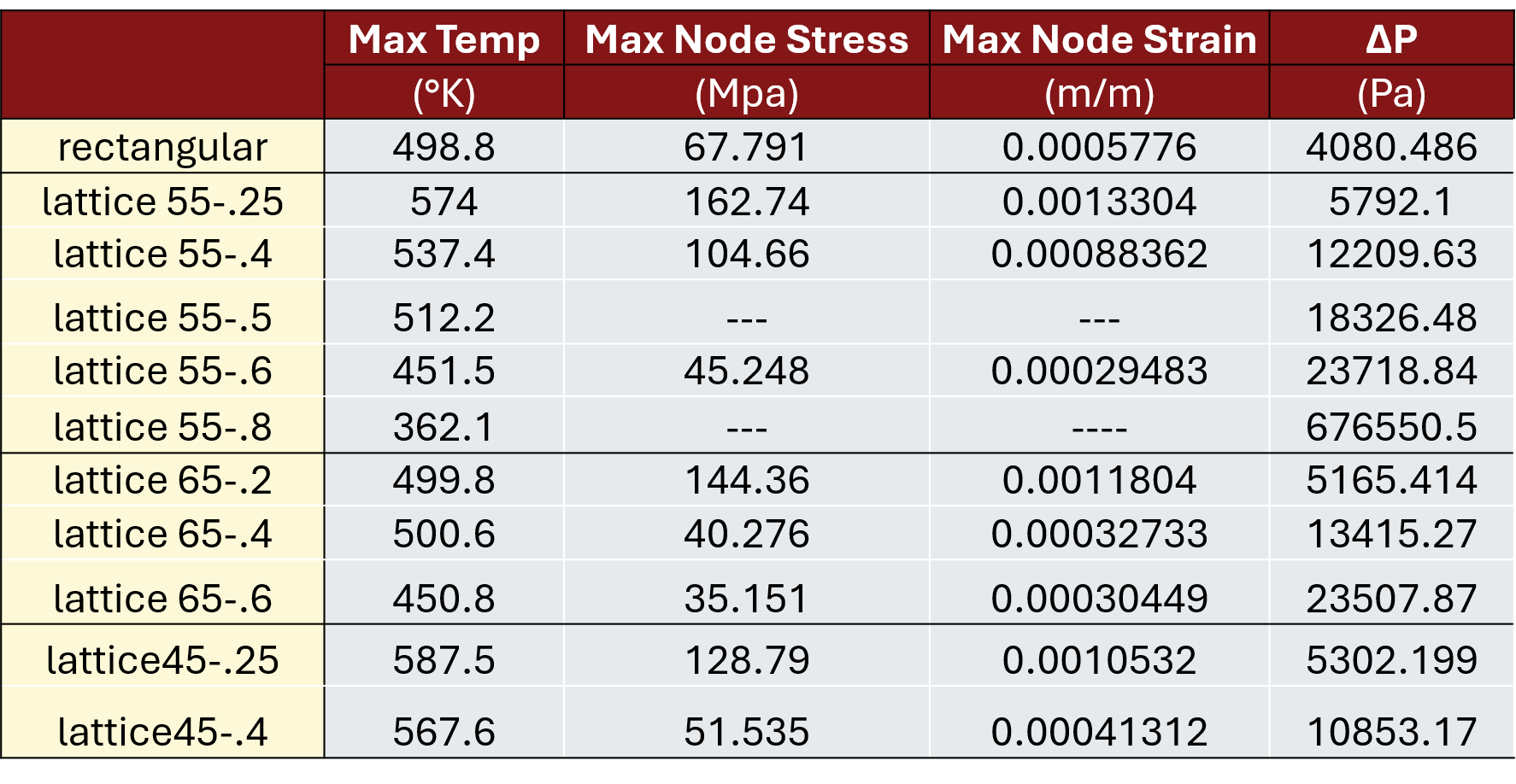
My simulations and comparison table reinforce the same pattern: lattice designs can improve cooling performance and reduce thermal loading, but the pressure-drop penalty grows quickly as the geometry becomes more aggressive.
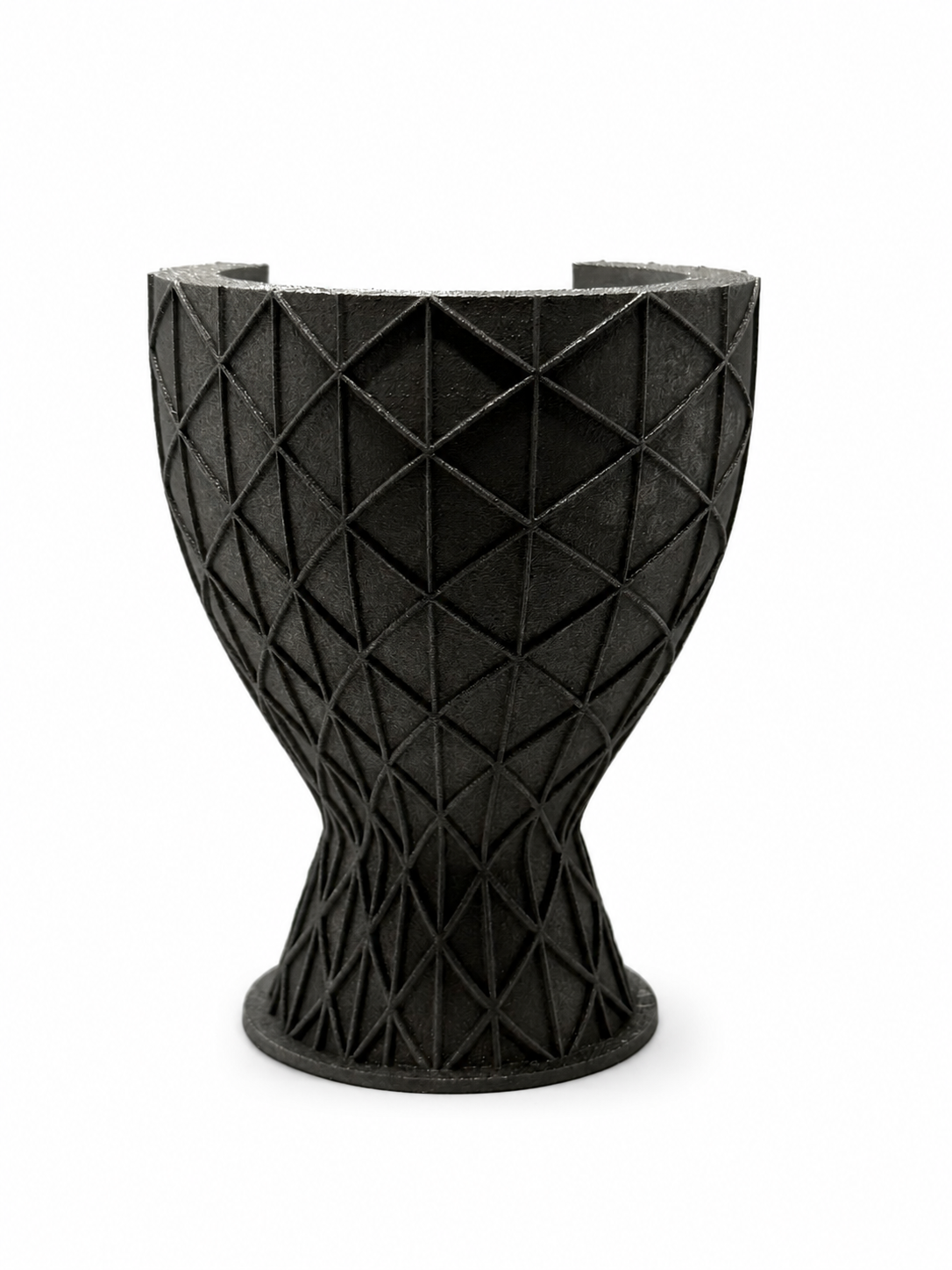
As printed
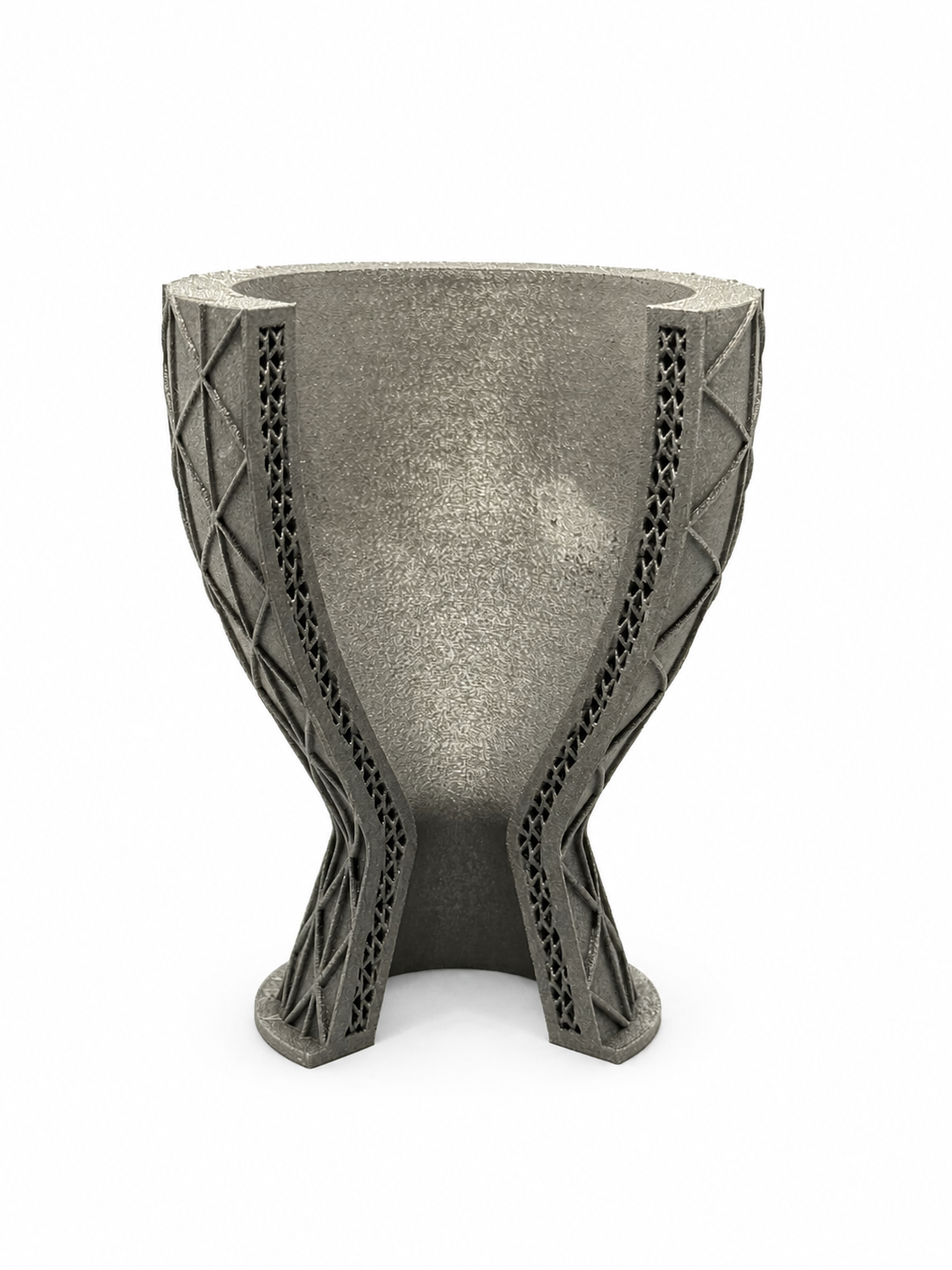
Back view of the printed nozzle prototype.
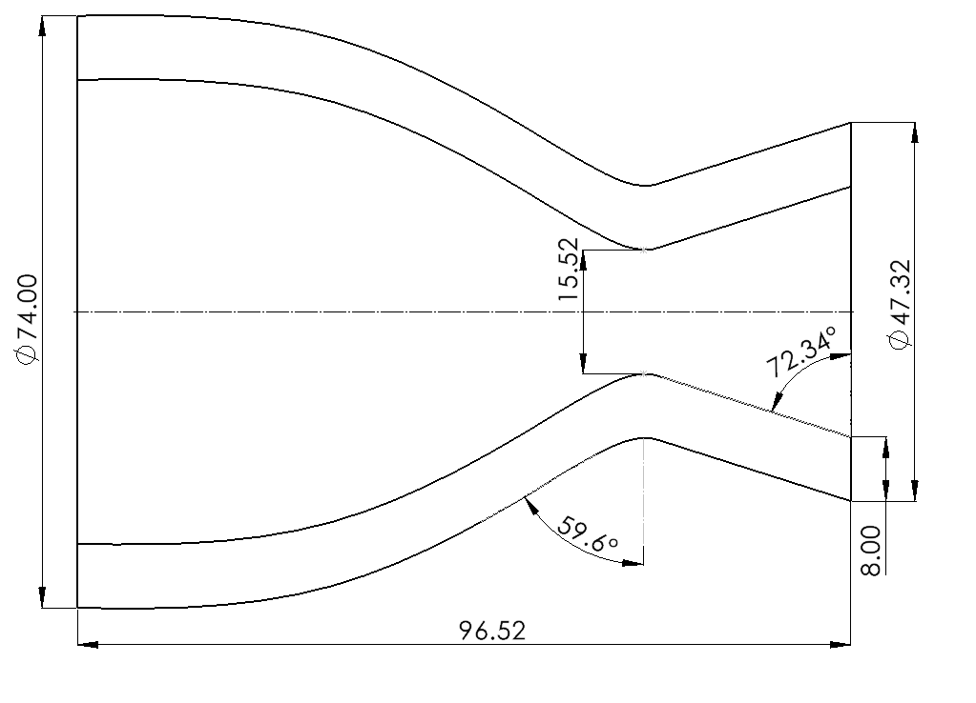
Reference geometry
Dimensioned profile used to anchor the CAD model.
Materials and process
Built as a single integrated Ti-6Al-4V part.
Ti-6Al-4V was selected because it is commonly used in aerospace applications and offers a strong strength-to-weight balance, corrosion resistance, and useful high-temperature performance.
Additive manufacturing made it possible to produce the internal lattice cooling geometry and the external variable isogrid as one part, which would be extremely difficult to machine conventionally.
Takeaway
What this project demonstrates.
I combined additive manufacturing, lattice cooling design, field-driven structural reinforcement, and printability analysis into one nozzle concept.
In short: it shows how a nozzle can be redesigned around a single-build cooling architecture that improves thermal performance, but still has to manage the pressure-drop penalty.